



It appears like Intel goes to boost the boundaries for temperatures with its next-gen desktop processors, which might be an indication of confidence within the stability of Arrow Lake – a hopeful trace of issues to come back, hopefully, when it comes to the present worries round Core i9 stability.
Earlier than we go leaping off Conclusions Cliff, nevertheless – it’s by no means a wise transfer to leap off any cliff, in spite of everything – we should always bear firmly in thoughts that freshly aired specs for Intel’s temperature thresholds are only a rumor as posted on X by leaker Jaykihn (hat tip to Tom’s {Hardware}).
TJMax for Arrow Lake and Panther Lake is 105C.Lunar Lake retains the earlier 100C.July 15, 2024
We’re informed that the TJMax – that’s the ‘most thermal junction’ temperature (we’ll come again to the jargon-busting momentarily) – for Arrow Lake and Panther Lake (next-gen cellular CPUs for 2025) is 105C.
Panther Lake for notebooks going this route is just not a shock actually – as Tom’s notes, Meteor Lake for laptops has already upped the ante to 105C – however desktop CPUs from the current-gen (going again to Alder Lake) have caught with 100C for this restrict (which Lunar Lake cellular may even run with, apparently).
So, with Arrow Lake on desktop, Intel is rising this by 5%, that means that the chip will probably be allowed to succeed in a better temperature (105C) earlier than the TJMax thermal safeguards kick in, lowering the ability to carry down the temperature – which additionally drops efficiency ranges, naturally.
Briefly, Arrow Lake will probably be allowed to run 5% hotter, and let’s focus on what this would possibly imply subsequent.
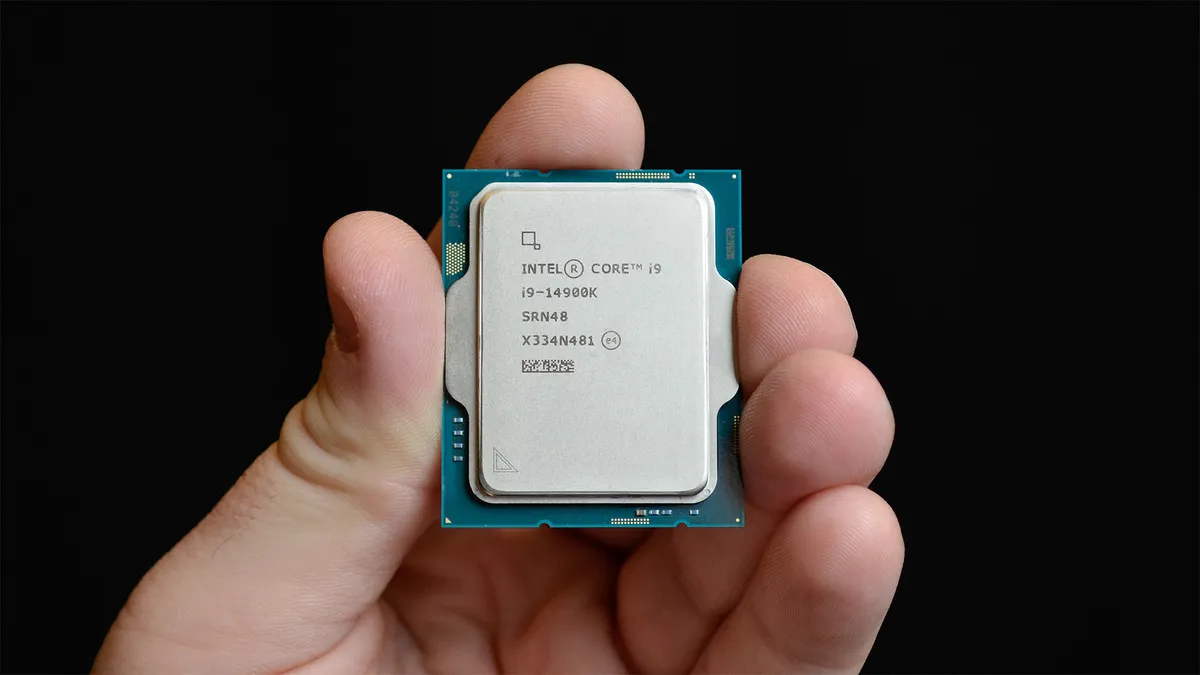
Evaluation: A constructive signal – proper?
Why would possibly Intel do that? Definitely, the intestine response from some of us on-line is that Intel must be engaged on stability, given the well-aired woes about Core i9 CPUs (from the thirteenth and 14th generations) crashing when gaming attributable to points Intel nonetheless hasn’t absolutely pinned down.
These are worrying issues certainly, and we’ve lately mentioned how such reliability points for higher-end processors might postpone would-be consumers of next-gen Arrow Lake, probably. Listening to that thermal safeguards are going to be raised would possibly look like a doubtful plan from Intel, in opposition to this backdrop – however we have to assume once more right here.
Firstly, that is only a rumored tweak to the spec – it might not occur. And secondly, if the TJMax is raised to 105C, quite than a priority for stability, we’d take this as a constructive signal. Intel should absolutely be assured sufficient within the high quality of its silicon and the steadiness of the next-gen CPUs to be upping thermal limits within the first place. If reliability had even the slightest query mark, this wouldn’t be taking place with Arrow Lake – it wouldn’t make any sense to make such a transfer, absolutely?
This makes us hopeful that high-end Arrow Lake processors (Core Extremely 9) gained’t be affected by the identical points as Raptor Lake (and its refresh) has skilled with Core i9s.
This transfer may additionally be partly sure up in Arrow Lake’s extra superior 3nm course of, and denser node, having the ability to higher deal with barely increased temps.
At any price, we wouldn’t fear at this level, though that hasn’t stopped loads of denizens of the same old boards and social media platforms from ringing some alarm bells quite loudly. And to be honest, we get that, given the present Core i9 scenario, as talked about – which we’re hoping to listen to a recent assertion on very quickly.
You may additionally like
RelatedPosts


